7 Canadian household budgets hit hardest by new US tariffs, and 4 moves to protect yours before August 19
A 47-year-old accountant in Burlington just locked in her variable-rate mortgage at 5.14%. She refinanced early not because she expected rates to spike, but because she's spent the last three weeks running household scenarios for clients whose August grocery bills are about to jump 18-22% the moment cross-border component costs hit retail. The August 19 tariff date is 29 days out. Here's who gets hit first, and the four moves that actually insulate your household before then.
The seven budget types taking direct fire
1. Dual-income families with two financed vehicles
A Ford F-150 built in Oakville crosses the US border three times during assembly. The 50% tariff lands on Canadian-made parts each time they re-enter. Your loan payment stays flat, but the warranty work, the replacement parts, and the trade-in value all move against you. Edmunds data shows cross-border-assembled vehicles lose 11-14% more depreciation during trade disputes than domestic-only builds.
2. Households heating with natural gas in the $200+/month range
Canadian natural gas exports feed back into the Eastern Canadian grid as refined product. A 50% tariff doesn't care whether the molecule started in Alberta. Enbridge and FortisBC have both filed for pre-approval to pass tariff costs through to consumers under existing PUB rules. If you're already over $200/month from November to March, add 15-20%.


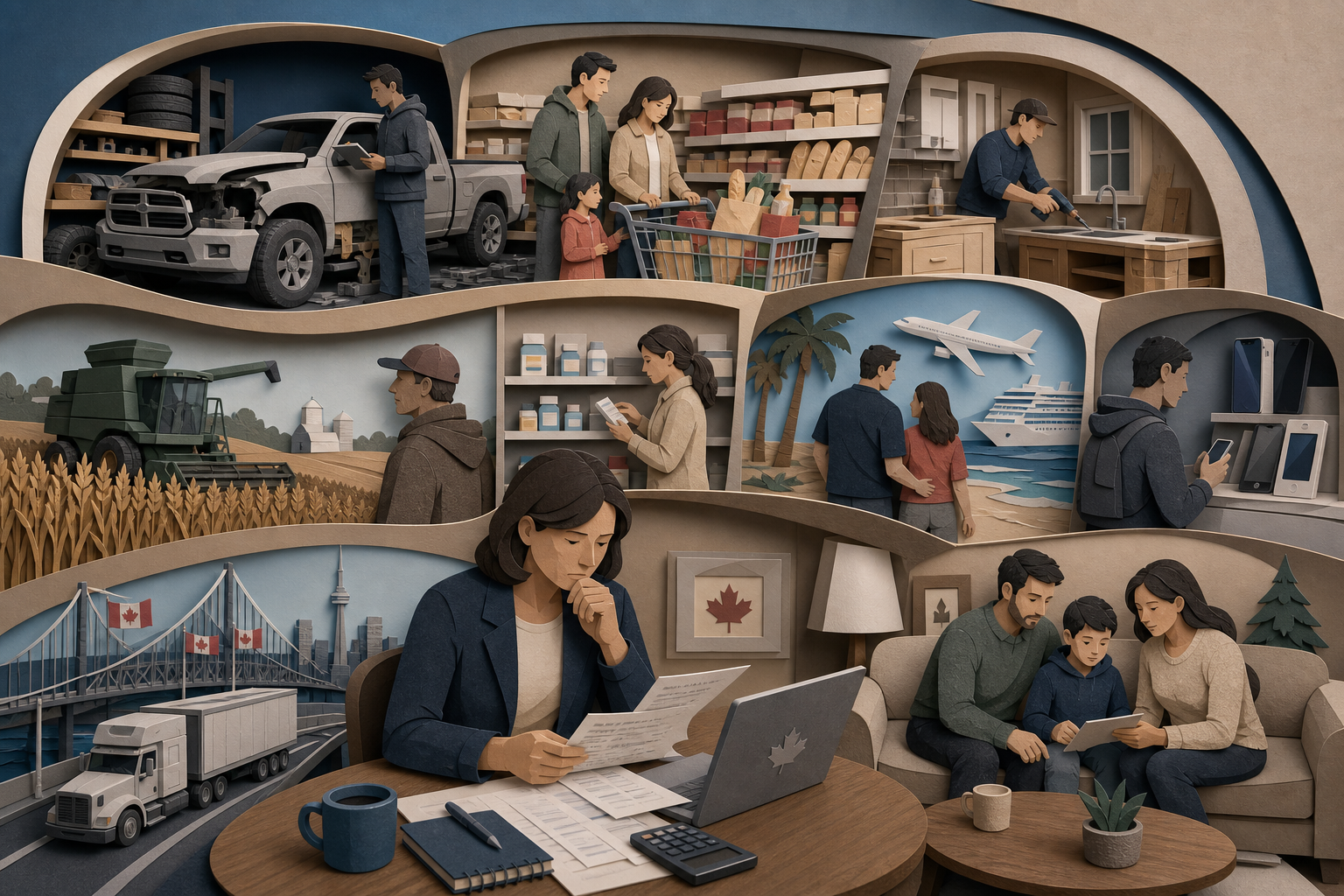

A 47-year-old accountant in Burlington just locked in her variable-rate mortgage at 5.14%. She refinanced early not because she expected rates to spike, but because she's spent the last three weeks running household scenarios for clients whose August grocery bills are about to jump 18-22% the moment cross-border component costs hit retail. The August 19 tariff date is 29 days out. Here's who gets hit first, and the four moves that actually insulate your household before then.
The seven budget types taking direct fire
1. Dual-income families with two financed vehicles
A Ford F-150 built in Oakville crosses the US border three times during assembly. The 50% tariff lands on Canadian-made parts each time they re-enter. Your loan payment stays flat, but the warranty work, the replacement parts, and the trade-in value all move against you. Edmunds data shows cross-border-assembled vehicles lose 11-14% more depreciation during trade disputes than domestic-only builds.
2. Households heating with natural gas in the $200+/month range
Canadian natural gas exports feed back into the Eastern Canadian grid as refined product. A 50% tariff doesn't care whether the molecule started in Alberta. Enbridge and FortisBC have both filed for pre-approval to pass tariff costs through to consumers under existing PUB rules. If you're already over $200/month from November to March, add 15-20%.
Read Next
Trump's 'Forced Labour' Tariffs on Canada Deserve More Scrutiny Than They're Getting
7 Ways to Cut Your Costs Before the August 19 US Tariff Hike Hits Canadian Households
Trump's tariff threats demand Canada's steadiest posture, not its loudest reply
CMHC Cuts Housing Forecast as Tariff Uncertainty and Toronto's First Population Drop in Decades Collide